Click to view the news
September, 2026
The sustainable future of aluminium
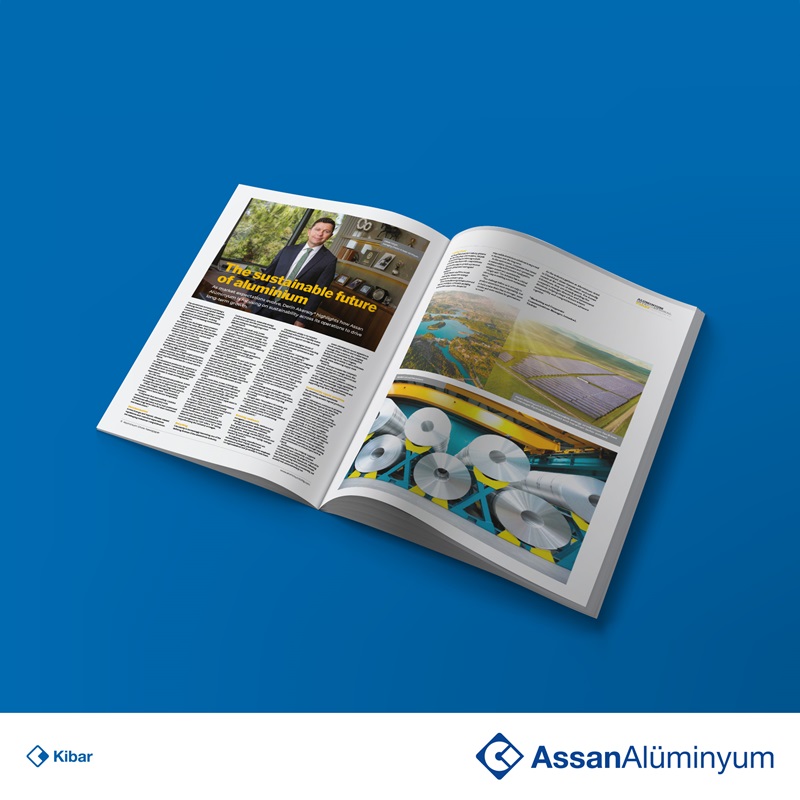
Sustainability, Resilience and Regionalization: Shaping the Next Chapter of the Aluminium Industry
The aluminium industry is entering a defining decade. Across global markets, manufacturers are navigating a complex combination of economic uncertainty, geopolitical developments, evolving regulations and increasing sustainability expectations. While these challenges create pressure throughout the value chain, they are also accelerating a transformation that has been underway for several years: the transition toward a more circular, low-carbon and resilient aluminium industry.
At the same time, demand fundamentals remain compelling. Aluminium continues to play a critical role in enabling the energy transition, supporting sustainable mobility, strengthening modern infrastructure and facilitating digitalization. Its unique combination of lightweight properties, impermeability, durability, conductivity and infinite recyclability positions it as one of the most important materials for a lower-carbon future.
For aluminium producers, the question is no longer whether sustainability will shape competitiveness, but how quickly companies can adapt their operations, investments and business models to meet evolving market expectations.
As one of Europe's leading flat rolled aluminium producers, Assan Alüminyum views this period not simply as a challenge, but as an opportunity to build stronger foundations for long-term growth.
"Sustainability and resilience have become inseparable concepts," says Göksal Güngör, Managing Director of Assan Alüminyum. "Companies that successfully combine environmental responsibility with operational efficiency will be best positioned to create long-term value for their customers and stakeholders."
Decarbonization as a Strategic Imperative
Across Europe and beyond, climate-related regulations and customer expectations are reshaping industrial competitiveness. Carbon transparency, renewable energy production and circular production models are becoming increasingly important differentiators.
Recognizing this shift early, Assan Alüminyum has embedded sustainability into its long-term corporate strategy. The company's Decarbonization Roadmap 2050 establishes a clear pathway toward net-zero emissions, supported by interim targets designed to steadily reduce carbon intensity over the coming decades.
This transformation is supported by investments in renewable energy generation, energy efficiency projects and circular production capabilities.
Through its hydroelectric and solar power investments, the company fully offsets its market-based Scope 2 emissions through International Renewable Energy Certificates (I-RECs). These initiatives not only reduce environmental impact but also enhance resilience against energy market volatility, which has become an increasingly important consideration for manufacturers across Europe.
At the same time, Assan Alüminyum continues to pursue operational efficiency projects that reduce energy consumption while improving productivity. Over the last 11 years, the company's numerous energy efficiency projects have had a carbon footprint-reducing environmental impact equivalent to the planting of 4.5 million trees.
The company's sustainability performance is further supported by internationally recognized frameworks. Assan Alüminyum's production and recycling facilities are certified against the latest framework of the Performance Standard of the Aluminium Stewardship Initiative (ASI), while its climate-related disclosures have been recognized by CDP with a "B" rating, outperforming the industry averages.
Advancing Circularity Through Recycling
Circularity is increasingly becoming one of the defining themes of the aluminium industry.
Aluminium's ability to be recycled indefinitely without loss of quality makes it uniquely positioned to support circular economy objectives. However, achieving higher levels of circularity requires significant investments in recycling infrastructure, process optimization and material innovation.
At Assan Alüminyum, recycling plays a central role within the company's sustainability strategy. Through its integrated recycling facility, internally generated scrap is reintroduced directly into production processes, while externally sourced process and post-consumer scrap contribute to increasing secondary material utilization.
Yet the industry's circularity ambitions also face practical limitations. High-quality scrap availability remains constrained globally, while increasing demand for low-carbon materials continues to intensify competition for secondary aluminium resources.
Addressing these challenges requires collaboration across the entire value chain, from product design and collection systems to sorting technologies and recycling processes.
"We believe circularity will be one of the most important drivers of competitiveness in the coming decades," notes Güngör. "The industry's ability to increase the availability and quality of recyclable material will play a critical role in accelerating decarbonization."
Building Resilience in a Changing Global Landscape
Alongside sustainability, resilience has emerged as another defining priority.
Recent years have demonstrated how geopolitical tensions, supply chain disruptions, energy market fluctuations and evolving trade policies can rapidly reshape market dynamics.
In response, many manufacturers are reevaluating their supply chains and investment strategies, placing greater emphasis on regionalization and proximity to customers.
Assan Alüminyum's recent expansion in North America reflects this broader trend. Through Kibar Americas, the company acquired an aluminium foil production facility in Fairmont, West Virginia, strengthening its ability to serve customers locally while enhancing supply chain flexibility.
While Europe remains the company's primary market and strategic focus, this investment supports a more balanced and resilient global operating model.
As international trade patterns continue to evolve, regional manufacturing capabilities are becoming increasingly important in reducing risk, improving responsiveness and supporting long-term competitiveness.
Sustainability Beyond Operations
The transition toward sustainable manufacturing extends beyond production facilities.
Assan Alüminyum continues to promote sustainability throughout its value chain through initiatives such as the K-Star Supplier Sustainability Program. Implemented across the Kibar Group, the program encourages suppliers from numerous sectors and countries to adopt sustainability principles and improve environmental and social performance. Additionally, K-Star Rise is a digital learning platform that helps Kibar Group suppliers build sustainability capabilities through ESG-focused training and supports the improvement actions defined under the K-Star Program. It also strengthens suppliers’ readiness for evolving regulations and customer expectations through training and assessments on critical topics such as CBAM.
The company also supports biodiversity and community-oriented corporate responsibility projects as part of its broader sustainability framework, reflecting the belief that long-term industrial success must create value not only economically, but also socially and environmentally.
Looking Ahead
As the global aluminium industry prepares for the next phase of its evolution, the path forward will require balancing multiple priorities simultaneously: competitiveness and decarbonization, growth and resource efficiency, globalization and regional resilience.
While market conditions remain challenging, aluminium's strategic importance continues to grow. From renewable energy infrastructure and electric mobility to sustainable packaging and modern construction, demand for responsible aluminium solutions is expected to increase over the long term.
In this environment, companies that invest in sustainability, innovation and operational resilience today will be better equipped to navigate tomorrow's uncertainties.
"Our industry has a critical role to play in enabling a more sustainable future," says Güngör. "The challenge before us is not only to produce aluminium more responsibly, but to build a value chain that is stronger, more circular and more resilient for generations to come."
As the industry gathers at Aluminium 2026 in Düsseldorf, these themes will undoubtedly remain at the center of discussion. For Assan Alüminyum, they are already guiding the company's strategic direction and investment decisions, helping shape a future where sustainability and competitiveness advance together.