Click to view the news
April, 2026
Evolving tariff structures and trade measures are increasingly shaping global trade dynamics
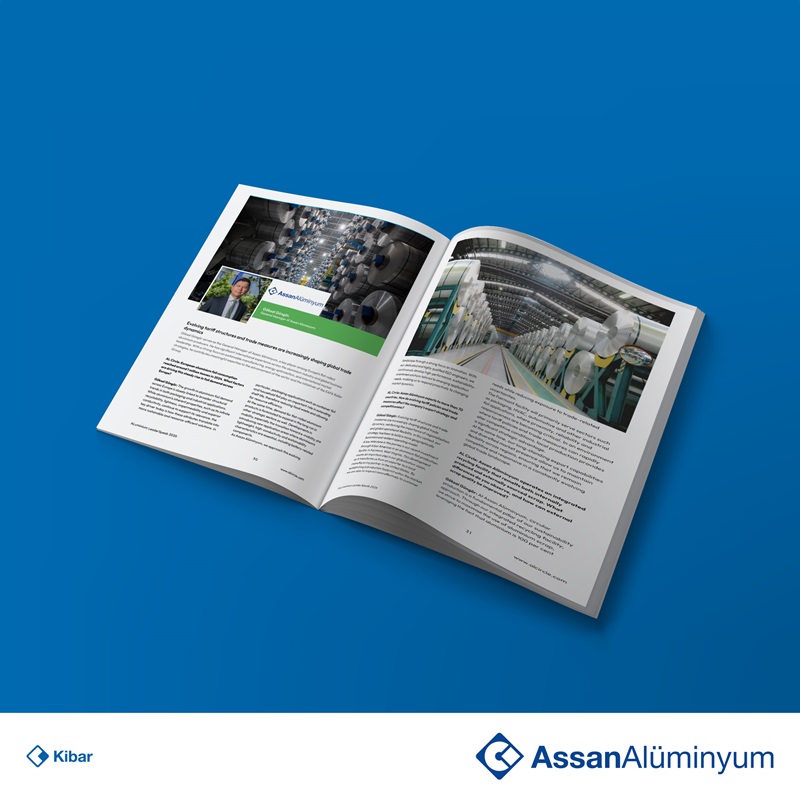
Göksal Güngör serves as the General Manager of Assan Alüminyum, a key player among Europe’s flat-rolled aluminium producers. He has significant international experience across the aluminium industry and global business leadership. With a strong focus on sustainable manufacturing, energy optimisation, and international market strategies, he contributes meaningful expertise to the advancement of the sector and the initiatives of the EAFA Roller Group.
1. European aluminium foil consumption reached around 1 million tonnes in 2024… What factors are driving this steady rise in foil demand across Europe?
The growth in aluminium foil demand across Europe is closely linked to broader structural trends in both packaging and industrial applications. While aluminium’s inherent properties, such as its infinite recyclability, lightness, impermeability and superior conductivity, continue to support its relevance, the key driver today is how these attributes translate into more sustainable and resource-efficient solutions. In particular, packaging applications such as container foil and household foil play an important role in extending shelf life, therefore reducing food waste and allowing for resource efficiency.
At the same time, demand for flat rolled aluminium products is forecasted to expand in the long run, in other strategic sectors as well. Developments in mobility, especially the transition toward e-mobility, are introducing new application areas where aluminium’s lightweight, high-conductivity and sustainability characteristics are essential, including battery-related components.
As Assan Alüminyum, we approach this evolving landscape through a strong focus on innovation. With our dedicated and highly qualified R&D engineers, we continuously develop high-performance, sustainability-oriented solutions tailored to emerging application needs, enabling us to respond proactively to changing market dynamics.
2. Assan Alüminyum exports to more than 70 countries… How do evolving tariff policies and trade measures affect the company’s export strategy and competitiveness?
Evolving tariff structures and trade measures are increasingly shaping global trade dynamics, reinforcing the importance of regionalization and global operational flexibility. In this context, our strategy has been to build a more geographically balanced and resilient operating model.
A key milestone in this journey is our recent investment through Kibar Americas in an aluminium foil production facility in Fairmont, West Virginia. This development marks an important step in our globalization vision, as it transforms us from an exporter into a local manufacturing partner in the United States. By establishing a production footprint within the market, we are able to respond more effectively to customer needs while reducing exposure to trade-related uncertainties.
The Fairmont facility will primarily serve sectors such as packaging, HVAC, automotive and other industrial foil applications, where proximity, reliability and responsiveness are becoming increasingly critical. In an environment where tariff policies and trade measures can rapidly alter competitive conditions, local production provides a significant strategic advantage.
At the same time, our long-standing export capabilities and diversified market presence allow us to maintain flexibility across regions, ensuring that we remain competitive and responsive in a constantly evolving global trade landscape.
3. Assan Alüminyum operates an integrated recycling facility that remelts both internally produced and externally sourced scrap… What differences do you observe, and how can external scrap quality be improved?
At Assan Alüminyum, circular production is a fundamental pillar of our sustainability approach. Through our integrated recycling facility, we strive to maximize the use of aluminium scrap, leveraging the fact that aluminium is 100% and infinitely recyclable without any loss of quality. All internally generated scrap is directly reintroduced into our production processes, ensuring both efficiency and consistency.
In addition, we actively source process scrap from our customers as well as post-consumer scrap from the market. While process scrap typically offers higher consistency and traceability, post-consumer scrap can present challenges in terms of contamination and alloy variability. This makes effective sorting and pre-treatment essential for maintaining high-quality output.
Improving scrap quality across the value chain requires better segregation by alloy type, reduced contamination and more standardized collection and processing practices. At the same time, it is important to recognize that scrap availability remains limited globally. While we continuously aim to increase the share of secondary aluminium in our production, the availability of high-quality scrap is a key constraint that the entire industry must address to achieve higher circularity rates.
4. Europe’s flat-rolled aluminium demand could rise significantly by 2032… How do you view the evolving opportunities in this market?
Europe represents a key market for flat-rolled aluminium, supported by strong demand across packaging, automotive, HVAC and construction sectors. In particular, the automotive industry is undergoing a significant transformation, where aluminium is increasingly becoming a material of choice due to its ability to support lightweighting and improve overall energy efficiency.
These characteristics, combined with aluminium’s recyclability and contribution to reducing lifecycle emissions, make it well aligned with the sustainability objectives of modern mobility and industrial applications.
At the same time, evolving trade measures are contributing to a more structured and competitive market environment. As Assan Alüminyum, our advanced production capabilities, strong customer relationships and internationally recognized sustainability performance position us well to capture these long-term growth opportunities in Europe.
5. How is Assan Alüminyum approaching evolving climate policies and mechanisms such as CBAM to remain competitive under the new carbon framework?
The increasing focus on carbon transparency and regulatory mechanisms such as the Carbon Border Adjustment Mechanism is redefining competitiveness in our industry. In this context, our approach is built on a clear and structured decarbonization roadmap, targeting net-zero emissions by 2050 with defined interim milestones. Unfortunately, the current CBAM framework is not appropriate for the aluminium value chain and it does not allow low carbon products to have lower CBAM costs.
A key component of this strategy is our investment in renewable energy. Through our hydroelectric and solar power generation, combined with International Renewable Energy Certificates (I-RECs), we are able to fully offset our market-based Scope 2 emissions. This not only strengthens our environmental performance but also enhances our resilience against energy market volatility.
In parallel, our ASI-certified operations and CDP-recognized climate disclosures reflect our commitment to transparency and alignment with global ESG standards. We also closely monitor the development of CBAM and similar frameworks, and with our accumulated expertise, we actively support and guide our customers in adapting to these evolving regulatory requirements.
6. How is Assan Alüminyum navigating the current geopolitical situation, particularly in relation to the Middle East?
The current geopolitical environment is creating significant pressure across the global aluminium value chain. Disruptions in critical trade routes such as the Strait of Hormuz, coupled with risks to energy infrastructure, are affecting raw material availability, logistics and overall cost structures. In particular, rising energy and petrochemical prices, along with increasing freight and supply chain costs, are placing additional pressure on downstream producers.
As Assan Alüminyum, we address these challenges through a strong focus on resilience and risk management. Our diversified supplier portfolio, managed in line with our ISO 31000-certified Risk Management System, allows us to balance sourcing across multiple regions. In addition, our ISO 22301-certified Business Continuity Management System ensures that we are prepared for potential disruptions through well-defined contingency plans.
While external pressures are reshaping cost dynamics across the industry, we remain committed to maintaining reliable supply and transparent communication with our customers, ensuring continuity even in a highly volatile environment.
7. How is Assan Alüminyum advancing its decarbonisation roadmap and integrating sustainability and CSR into its growth strategy?
Sustainability is fully embedded in our long-term growth strategy, with decarbonization as one of its central pillars. Our roadmap toward net-zero emissions is supported by continuous investments in renewable energy, increased energy efficiency and the expansion of circular production practices.
A key element of our approach is the development of recycling-friendly alloys, such as 3423 and 6005A, which are designed to support higher recyclability while maintaining strong performance characteristics. Through our R&D capabilities, we continuously work on improving material efficiency and enabling more sustainable product lifecycles.
In addition to environmental initiatives, our sustainability framework also includes social responsibility and biodiversity preservation projects, reflecting a holistic approach to responsible production. We believe that long-term success in our industry depends on the ability to combine operational excellence with environmental and social impact, and we continue to advance in this direction.